Thursday, May 25, 2006

She's Asking the Wrong Question
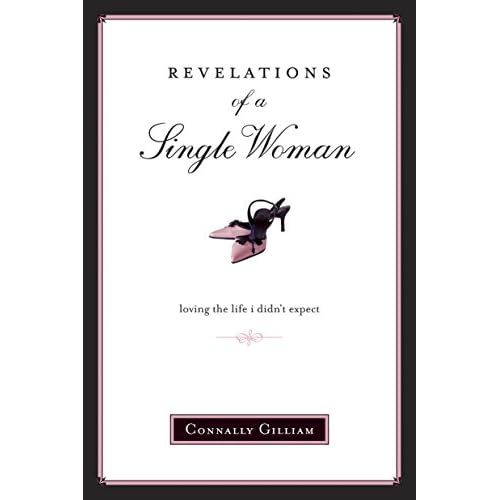

"Men, who needs them?" That's the question author and single woman, Connally Gilliam, poses in an excerpt from her book, Revelations of a Single Woman. (The excerpt is running this week on Crosswalk.com.)

What a question. I'd say it's the wrong question. It makes me wonder, what's a woman who professes Christ doing asking a question that feminists ask rhetorically?

Anyone with a cursory knowledge of Scripture knows that as women, we owe our very existence to the fact that Adam was lonely. God, in His love for Adam, formed a helper from Adam's side: another human, but different from Adam. Because of man, God made woman.

And it's not just husbands we need.

We need our dads. Without them we literally wouldn't be here. Hopefully they were the source of provision and protection God designed them to be.

She spends a lot of words disclaiming her assertion that we do need men, focusing on their fallenness. As in, "men – like women – are fallen image bearers and can be schmucks as fathers, brothers, colleagues, friends, or husbands, and more often than not as strangers. They can spark deep, angry breaths and elicit sad, weary sighs." Though she mentions in passing that women are fallen, she repeatedly reminds readers that men are. It's as if she assumes women are redeemed but is afraid to suggest, or doesn't really believe, that men can be.

And as the great granddaughter of an Orthodox cantor in the Jewish synagogue, I learned at a young age that the word "schmuck" is not to be used in polite company. Either Gilliam doesn't know what the word means or she does and knew her Christian publisher would never run the English equivalent.

In the end, hers is an anemic vision of why women need men (because a compliment sounds better coming from the lips of a guy than a girlfriend). It left little doubt as to why I found her book so discouraging and lacking in practical, biblical wisdom for single women who desire marriage.

This chapter bothered me when I read it in Gilliam's book and it's still bothering me now that I've read it again online. I think I know why. She's asking the wrong question. If I were doing the asking, my question would be, "Since we as women need men so much, what can we do to encourage their biblical masculinity?"

Saturday, May 13, 2006

Why family for men? A spiritual legacy

So far, the reason I've been offering for why men should marry and have family is that family is central to God's purpose for their life and that it is a blessing as well as a crucible that refines character. My last point is that of spiritual legacy.

In the last couple of years, social scientists who once warned about a population explosion and encouraged controls on reproduction are now making a 180 degree turn. Analysts such as Philip Longman warn fellow liberals that conservatives who choose to have children will win tomorrow's debates simply by sending representatives into the future. While it's no guarantee that children will believe and vote the same as their parents, the likelihood is that the majority will. Already there has been talk of a Roe effect in which the anti-reproductive agenda of the Democratic party may have cost them the past two presidential elections by cutting off a supply of future voters.

Anyone interested in fulfilling the High School graduation cliche' of leaving the world a better place should recognize that leaving descendants can have lots of direct impact. Sting recently released a song called "Send Your Love" that touches on the power of having children in order to affect the years ahead. "Send your love into the future," the song says, "Send your precious love into some distant time." More importantly, Sting has backed up his advice by having six children.

Students of the Bible discover that God sees the idea of leaving a legacy as bigger than politics or personal values. Malachi 2 says:
Has not the Lord made them one? In flesh and spirit they are his. And why one? Because He was seeking Godly offspring. So guard yourself in your spirit and do not break faith with the wife of your youth.
Author Gary Thomas once observed that those boring genealogy chapters about how so and so begat so and so may be among the most important in the Bible. He points out that for all his writing and speaking, maybe the most significant thing he did was "begat" his three children.

That was the message I got from my dad as he lay dying in the hospital (the family picture here was taken the summer before he died). In his short 56 years, he launched his own church, negotiated over 500 cuts of songs he wrote and chalked up numerous other accomplishments. Yet, he told me, "Marrying your mom and having you and your brothers were the best things I ever did."

Our investment in family doesn't always show a return in our lifetime. One of the scriptures I leaned on the most as a single was Jeremiah 29:11.
"For I know the plans I have for you," declares the Lord, "plans to prosper you and not to harm you, plans to give you hope and a future."
Only recently, did I notice that in the scripture just before that passage, the Lord was telling the exiles in Babylon that He would take them back to Jerusalem in seventy years. That means a lot of the exiles who heard that message would be either really old or maybe even dead before that promise was fulfilled. So what "hope and future" was God talking about? To find that, you have to back up a few more verses:
This is what the Lord Almighty, the God of Israel, says to all those I carried into exile from Jerusalem to Babylon: Build houses and settle down; plant gardens and eat what they produce. Marry and have sons and daughters; find wives for your sons and give your daughters in marriage, so that they too may have sons and daughters. Increase in number there; do not decrease.
It's important to note that God not only blessed these exiles with hope and prosperity seventy years later, but that He blessed them during those seventy years through the families He encouraged them to form. It's also worth noting that the future blessing not only included a return from exile, but also continuity of a lineage that brought the Messiah into the world.

What legacy have you inherited? Whether you have received a rich or a poor spiritual legacy, you have the opportunity to contribute a significant chapter of your own to God's unfolding story throughout the generations.

This wraps up my attempt to answer the question, "Why should men marry and have children?" If you have any thoughts to either supplement or further elaborate on the concepts of purpose, blessing, crucible and spiritual legacy, I'd love to hear from you.

Thursday, May 11, 2006

Why family for men? The crucible

I was going to post the next entry in my series on why men should marry and have children last night, but instead I spent most of the night at the emergency room. Moving into the second trimester of her pregnancy, Candice was just getting over morning sickness when she had her worst day yet. She woke up with a migraine and nauseau and then found she couldn't keep down any of the medicine that would treat those problems. She threw up multiple times. Eventually, the doctor's office encouraged us to go to the emergency room and get an IV drip going to avoid dehydration and a health risk for the baby.

Candice needed me through all this:
  • to bring her breakfast (that she threw up)
  • to bring her ice chips (that she threw up)
  • to feed the kids breakfast
  • to re-arrange my work schedule so I could take our daughter to pre-school
  • to clear the rest of my work schedule because now Candice really needed me:
    • to run to the drugstore
    • to pick our daughter up from pre-school
    • to feed the kids lunch
    • to handle numerous phone calls and visitors at the door
    • to feed the kids dinner (with help from some generous friends)
    • and then to pack up supplies and arrange for someone (specifically those same generous friends) to take care of our kids while we took off for the emergency room.
So what was the topic I was planning to address in my post last night? The crucible of marriage and family, with crucible defined as "the state of pain or anguish that tests one's resiliency and character." Now my day yesterday is nowhere near the family crucible hall of fame. It's fairly routine for pregnant women to need this level of care and I'm aware of several who needed much more help because of greater complications.

Pregnancy is, however, prime time for me in my roles of provider and protector. It's also a reminder that the blessings of family are interwoven with the responsbilities and challenges. My problem is that it doesn't come naturally for me to lay down my life for my family. I do it because they need me to--because they're counting on me.

In the past nine years of marriage and six years of parenting, I've discovered servant muscles I didn't know I had. When I was single I thought I was a fairly altruistic guy. Having a family has helped me realize how selfish I really was (and can still be at times). Like the crucibles used in the labs to heat substances for refining, the responsibilities of family flare up and work to refine the selfishness out of me. God calls us all to think of others before ourselves--family tests our ability to do that on a regular basis. It adds a level of high heat that is rarely equaled in other settings. It's true that some people melt under the heat and either try to leave the kitchen or let the heat burn the wife and/or kids who need their help (I've been there), but if they can keep the heat contained in the crucible, it can do it's refining work. This is consistent with Romans 5:3 and 4: "We also rejoice in our sufferings because we know that suffering produces perseverance, perseverance, character and character, hope."

Reflecting on the difficulties of maintaining happiness within family, Gary Thomas observed that maybe God didn't give us marriage and children to make us happy, but to make us holy. A pervasive myth in our culture is that commitment and sacrifice are barriers to our fulfillment--the crucible of family proves that they are instead the path.

Tuesday, May 09, 2006

Some family blessings I've enjoyed

I've had my share of challenges and frustrations as husband and father, but as a postscript to my last post, I'm reminded to count the blessings family brings to me:
  • Having the sound of the garage door opening drowned out by two little kids screaming, "Dadeee's home!!"
  • Having all the random "short stories" of my single years turn into a long unfolding novel with Candice.
  • Rediscovering the world through the eyes of a child
  • Throwing parties as a team with Candice--where each of us can contribute what we do best.
  • Rough-housing with a son who keeps saying, "Do it again daddy, do it again."
  • A steady companion and a regular date who's just as available for a dance in the kitchen as she is for a night on the town.
  • Dancing with my daughter while she stands on my feet.
  • Having someone love me enough to tell me my clothes don't match before I leave the house.
  • Keeping a Saturday morning family pancake breakfast tradition.
  • Having "remains of the day" conversation on the porch with Candice.
  • and so on...

Why family for men? The blessing of a yoke

As our generation increasingly takes a cost/benefit analysis approach to getting married and starting a family, it seems that the cost side is easier to articulate.

The 20,000 Quips and Quotes book on my shelf offers more entries on the costs of marriage than the benefits—with quotes like, “The trouble with wedlock is that there’s not enough wed and too much lock” and “Marriage is a feminine plot to add to a man’s responsibilities and subtract from his rights.” When it comes to the costs of parenting, there are even calculators available now to let you know how much you can expect to shell out to raise a child over a lifetime (around $170,000 on average according to Parenthood.com).

These examples add to a growing list of costs (financial, emotional, social and otherwise) that we are told come with family. Yet the Bible describes family as a good thing and as a blessing. Proverbs 18:22 says, “He who finds a wife finds what is good and receives favor from the Lord.” And check out how The Message paraphrases Psalm 127:3-5:
3 Don't you see that children are GOD's best gift? The fruit of the womb his generous legacy? 4 Like a warrior's fistful of arrows are the children of a vigorous youth. 5 Oh, how blessed are you parents, with your quivers full of children!
While giving a blessing at our wedding, one of our graduate school professors noted that a blessing is not a passive thing, it’s active—the intense opposite of a curse. Social research consistently reinforces the blessing of marriage in a man’s life—showing that married men are much happier, healthier and wealthier. A study by Ohio State University showed that a person who marries (and stays married) builds nearly twice as much personal wealth as someone who is single or divorced.

One explanation for this blessing is Ecclesiastes 4:9 “Two are better than one because they have a good return for their labor.” The economies of scale mean a husband and wife can pool their resources and efforts to make everything go further. I know I’m also healthier because my wife keeps things like vegetables in my diet and because she encourages me to have a doctor check things that I probably would keep on ignoring.

However, the primary reason men tend to benefit from family is because of the yoke that it places on them. Like the powerful oxen that can be guided with a yoke to cultivate the land, the structure of family channels a man’s energy into productive causes. This is a principle George Gilder articulates well in Men and Marriage (especially in his opening prologue called "The Princess and the Barbarian").

A good recent example of the power of a yoke was the movie Cinderella Man. (check out the Plugged In review). Based on the true story of boxer Jimmy Braddock, the movie shows the desperate times of the Great Depression challenging Jimmy’s desire to be a good provider for his family. Going up against the daunting Max Baer, Jimmy is asked what he’s fighting for. “Milk money,” he says. While Max towers over Jimmy in the ring and even though he is known for killing a man with his powerful punch, he lacks Jimmy’s motivation. In contrast to the earlier scenes of Max in bed with two women, we know Jimmy is doing his best to care for his wife Mae and their three kids. Towards the climax of the fight, Jimmy delivers every other punch following a mental flash of his family. It’s the drive of a provider that ultimately proves to be his competitive edge.

Sunday, May 07, 2006

Why Family for Men? Centrality to Purpose

Upon hearing the story behind the ring Bilbo had left to him, Frodo said, "I wish I had never seen the Ring! Why did it come to me? Why was I chosen?"

"Such questions cannot be answered," replied Gandalf. "You may be sure that it was not for any merit that others do not possess: not for power or wisdom, at any rate. But you have been chosen, and you must therefore use such strength and heart and wits as you have."

Even though it ended up involving untold peril and hardship, there is something envious about Frodo discovering his purpose in life. For many young single men, a sense of purpose is highly elusive. In an affluent culture, where money can deliver all kinds of stuff and experiences, it becomes that much more frustrating that it can't deliver purpose. Consider this passage from the book A Whole New Mind:

Abundance has brought beautiful things to our lives, but that bevy of material goods has not necessarily made us much happier. The paradox of prosperity is that while living standards have risen steadily decade after decade, personal, family and life satisfaction haven't budged. That's why people--liberated by prosperity but not fulfilled by it--are resolving the paradox by searching for meaning.

Why do you think Purpose-Driven Life has sold 25 million copies?
Why do you think Wild at Heart has been so popular with men? These books offer modern readers an opportunity to rediscover timeless Biblical truth in order to restore purpose and vision to their lives. Unfortunately, these books have little to say about family. Yet family is woven throughout the Bible as an element of purpose--especially in the initial creation and commissioning of humans that takes place in Genesis.

Take a look at Genesis 1:26-29 and Genesis 2:18-24. Theologians find in these two passages a commissioning for men to get out in the world and to be stewards of God's creation--creating and developing the world in His image. It's also clear, however, that God is directing men to take on that challenge and responsibility in partnership with a wife. Using strong verbs, God calls a man to "leave father and mother and be united to his wife" and to "be fruitful and increase in number."

Young men longing for purpose in life should recognize that Genesis offers a rough outline for their calling. While it doesn't tell them what creative or developing work they should take on, it does indicate to them that a wife and family will be central to accomplishing that work. Unless they are among the small minority of men who are given a gift of celibacy that allows them to take on their calling without the companionship of a wife, family will be the organizing structure and central element of their purpose.

A man's calling to create and develop will intersect with family in two ways--both in his pursuit and cultivation of a family and then in how family will bring support and motivation for the creative and developing work a man has been called to do.

A young man who prayerfully discovers whether he has been called to do his work in family or in celibate service will then gain a new perspective for all the other decisions he has to make--regarding his time, his money, his sexual drive, his vocation and his avocations.

One of my favorite lines in It's a Wonderful Life is when George Bailey's mother says to him, "Why don't you go see Mary? She may be able to help you find the answers." While we all know that only God can complete us and that only He has answers to our deepest questions, we can see from Genesis that He created marriage and family as a path by which many of those answers will be revealed.

Saturday, May 06, 2006

Why should men marry and have a family?

This is my first post on Why Family and it's focused on the name of our blog.

"Why family?" is a question people ask today in a way they never did before. Social scientists have observed that while single men have been asking "Who should I marry?" and "When should I marry?" for some time, it's fairly new for them to add the question, "Why marry?" and then if marriage occurs to ask "Why have children?"

"The unexamined life is not worth living," said Socrates and a growing number of singles are taking that truth to heart in regard to a path their parents and grandparents followed without much thought. Some skeptics encourage deep reflection prior to marriage as a way to avoid divorce. They ask singles to pause and take a rational look at marriage before riding the crest of infatuation into a potentially bad thing. Other skeptics question the whole institution of marriage in a day when many of the benefits of matrimony are increasingly available to guys without a formal commitment. In that light, they ask, "Why take on the headaches, the costs, the risks and responsibilities of marriage?" "Why lose my freedom?" "Why limit my options by committing to one person?"

Some guys concede that marriage is worth those tradeoffs but reserve greater skepticism about having children. Why not just enjoy a childless marriage? I get the sense that guys asking these questions are finding better reasons not to marry or have children than they are reasons to go for it. I'm afraid that our churches and friends in the faith community are failing us on this subject as well--with few prepared to provide a Biblical vision for family in the midst of our skeptical culture.

How would you answer the question, "Why family?"

In my next few posts, I'll offer up four different reasons.